

History of motorcycles
- gregsthings
- May 19, 2022
- 11 min read
Research from the web that I found
kawasaki History Kawasaki emerged out of the ashes of the second World War to become one of the big players from Japan. In the late ’60s and early ’70s, Kawasaki built a reputation for some of the most powerful engines on two wheels, spawning legendary sportbikes like the Ninja series and a line of championship-winning off-road bikes.
1896The company is founded by Shozo Kawasaki. His firm will come to be known as Kawasaki Heavy Industries. Over time, the company’s principal areas of activity will be shipbuilding, railroad rolling stock, and electrical generating plants. Motorcycles will become a small part of this diversified industrial conglomerate.
1960Kawasaki signs agreement to take over Meguro motorcycles, a major player in the nascent Japanese motorcycle manufacturing business. Meguro is one of the only Japanese companies making a 500cc bike. In England and the UK, Meguro’s 500 – which bears a strong resemblance to the BSA A7 – is derided as a cheap copy. But in fact, it is a pretty high-quality bike.
1961Kawasaki produces its first complete motorcycle – the B8 125cc two-stroke.
1962A series of the two-stroke models from 50-250cc is released. The 250cc disc-valve ‘Samurai’ attracts notice in the U.S.
1966The 650W1 is released and is the biggest bike made in Japan at the time. It’s inspired by the BSA A10. Over the next few years it will get twin carbs, and high pipes for a ‘scrambler’ version.
1969Dave Simmonds gives Kawasaki its first World Championship, in the 125cc classThe striking Kawasaki H1 (aka Mach III) a 500cc three-cylinder two-stroke is released. Although its handling leaves something to be desired, the motor is very powerful for the day. It’s one of the quickest production bikes in the quarter-mile. The Mach III establishes Kawasaki’s reputation in the U.S. (In particular, it establishes a reputation for powerful and somewhat antisocial motorcycles!) A wonderful H1R production racer is also released – a 500cc racing bike. Over the next few years, larger and smaller versions of the H1, including the S1 (250cc) S2 (350cc) and H2 (750cc) will be released. They’re successful in the marketplace, and the H2R 750cc production racer is also successful on the race track, but Kawasaki knows that the days of the two-stroke streetbike are coming to an end. The company plans to release a four-stroke, but is shocked by the arrival of the Honda 750-Four. Kawasaki goes back to the drawing board.
1973The first new four-stroke since the W1 is released. It’s worth the wait. The 900cc Z1 goes one up on the Honda 750 with more power and double overhead cams. Over the next few years, its capacity will increase slightly and it will be rebadged the Z-1000.
1978Kork Ballington wins the 250cc and 350cc World Championships with fore-and-aft parallel-Twin racers (Rotax also built racing motors in this configuration. Ballington will repeat the feat in ’79. In 1980 he will finish second in the premier 500cc class. Anton Mang takes over racing duties in the 250 and 350 classes, and he will win four more titles over the next three years. This is the most successful period for Kawasaki in the World Championship. Kawasaki’s big-bore KZ1300 is released. Honda and Benelli have already released six-cylinder bikes by this time, but Kawasaki’s specification includes water cooling and shaft drive. To underline the efficiency of the cooling system, its launch is held in Death Valley. Despite its substantial weight, journalists are impressed. Over the next few years, the KZ1300 will get digital fuel injection and a full-dress touring version will be sold as the ‘Voyager.’ This model is marketed as “a car without doors”!
1981Eddie Lawson wins the AMA Superbike championship for Kawasaki after an epic battle with Honda’s Freddie Spencer. He will repeat as champion the following year.Kawasaki releases the GPz550. It’s air-cooled and has only two valves per cylinder, but its performance threatens the 750cc machines of rival manufacturers. This is the bike that launches the 600 class.
1983The liquid-cooled four-valve GPz900R ‘Ninja’ is shown to the motorcycle press for the first time at Laguna Seca. They’re stunned.
1985James “Bubba” Stewart, Jr. is born. Kawasaki supplies his family with Team Green diapers.
1989The first ‘ZXR’-designated bikes reach the market. They are 750cc and 400cc race replicas.
1990The ZX-11 is launched and features a 1052cc engine. It is the first production motorcycle with ram-air induction and the fastest production bike on the market.
1991The ZXR750R begins a four year run as the top bike in the FIM Endurance World Championship.
1993Scott Russell wins the World Superbike Championship, much to Carl Fogarty’s dismay.
2000The ZX-12R is released – the new flagship of the ZX series.
2002Bubba Stewart wins AMA 125 MX championship.
2003Stewart is AMA 125 West SX champ. “What the heck is he doing on the jumps?” people wonder. It’s the “Bubba Scrub.”In a daring move that acknowledges that only a small percentage of supersports motorcycles are ever actually raced, Kawasaki ups the capacity of the ZX-6R to 636cc. Ordinary riders welcome a noticeable increase in mid-range power, and the bike is the king of the ‘real world’ middleweights.
2004Stewart wins the AMA 125 East SX title, and the 125cc outdoor championship. There are only one or two riders on 250s who lap any faster than he does on the little bikes.Just when we thought motorcycles couldn’t get any crazier, the ZX-10R is released. OMG, the power!
2007Although his transition to the big bikes hasn’t been as smooth as many expected it to be, Stewart wins the 2007 AMA SX championship.
2008Kawasaki gives the Concours a much-needed revamp in the Concours 14. Sharing the 1352cc engine from the ZX-14, it’s touted as the ultimate sport touring motorcycle. While they’re at it, Kawasaki also decides to give the Ninja 250 and KLR 650 major updates, after years of inactivity
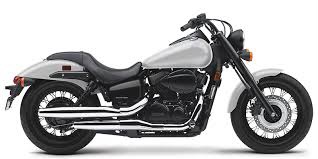
Honda history
Honda Motorcycle History Honda was founded in the late 1940s as Japan struggled to rebuild following the second World War. Company founder Soichiro Honda first began manufacturing piston rings before turning his attention to inexpensive motorcycles. Mr. Honda always had a passion for engineering, and this became evident by the wild sales success of his motorcycles in the 1960s and by competing head-to-head against the world’s best on racetracks. Today, Honda is a juggernaut, offering class-leading machines in most every category.
1906Soichiro Honda is born in Hamamatsu, Japan. His father owns a blacksmith shop that also repairs bicycles. As a young man, Honda is an apprentice in an automotive garage in Tokyo.
1928Honda returns to Hamamatsu to open his own auto repair shop. Enamored with speed, he builds his own race car.
1936Honda is injured in an auto racing accident.
1937He forms a company to manufacture piston rings. After a shaky start (owing mostly to his complete lack of formal training in metallurgy) his company becomes successful. He is a key supplier to Toyota, which starts manufacturing cars at about the same time.
1946Soichiro Honda sells his piston-ring business. Japan is struggling to regain some semblance of normalcy, after having been bombed flat at the end of WWII. Honda realizes the need for affordable transportation and begins grafting war-surplus two-stroke motors onto bicycles. (The motors had originally been intended for use on portable generators for military radios.)
1948Honda Motor Co. Ltd is incorporated. Soichiro Honda focuses on the engineering side of the business, while financial operations are controlled by Takeo Fujisawa.
1949The company produces its first real motorcycle, powered by a 98cc a two-stroke motor. When an employee sees the first one assembled and it is ridden outside the factory, he says, “It’s like a dream.” The name “Dream” was adopted for the bike, officially known as Model D.
1951Mr. Honda is infuriated by the noise, smell and fumes from the two-stroke motorbikes (including his own) that crowd Japanese city streets. In response, the company creates its first four-stroke motorcycle, the Dream E (146cc).
1952Despite the fact that he despises such “primitive” powerplants, Honda flirts with his original notion of auxiliary motors for bicycles. The Cub F (two-stroke, 50cc) clip-on motor is sold through thousands of independent bicycle shops across Japan. It is only manufactured for two years, but it introduces the “Cub” trademark, which will be popular for decades in various guises.
1953The Benly J (4-stroke, 90cc) is released. At least some of these were sold with “Benly” tank-badges, and carried the Honda name on engine cases only. The Benly series also lasted a long time, and ushered in an era of improved performance. They were immediately popular with Japan’s amateur racers.
1954Soichiro Honda shares his own dream, of success in Grand Prix motorcycle racing. He writes, “My childhood dream was to be a champion of motor racing with a machine built by myself. However, before becoming world champion, it is strongly required to establish a stable corporate structure, provided with precise production facilities and superior product design. From this point of view we have been concentrating on providing high quality products to meet Japanese domestic consumer demand and we have not had enough time to pour our efforts in motor cycle racing until now… I here avow my intention that I will participate in the TT race and I proclaim with my fellow employees that I will pour all my energy and creative powers into winning.”Mr. Honda attended the Isle of Man races as an observer that year, paying particular attention to the German-made NSU motorcycles that dominated the 125 and 250 classes. Although it is widely believed Honda “copied” these machines, it is not true; the NSU racers were singles with bevel-drive cams–nothing like the early Honda racers.
1957The leading Italian manufacturers, including MV Agusta, Gilera, and Mondial announce that they will withdraw from World Championship racing, citing increasing costs. MV Agusta will renege on this agreement and continue racing. Honda buys one of the last Mondial race bikes. The Japanese company doesn’t copy the Italian bike, but it does use it as a source of inspiration and an example of the standard they need to reach.
1958The Super Cub (aka C100, aka CA100, aka simply “the Honda 50”) hits the market. It features a pressed-steel frame, leading-link fork, step-through design and a 50cc four-stroke motor. It is destined to be sold under various names, and will later grow to 70cc, and finally 90cc. It will become the most popular motorcycle–indeed, the most popular motor vehicle of any kind.
1959Honda enters the famed Isle of Man TT races for the first time. The company fields five machines in the 125cc “Ultra-lightweight” class. The bikes are 125cc twins, of the type raced the previous year in Japanese national competition. Naomi Tanaguchi achieves the team’s the best TT result, finishing sixth. Honda wins the manufacturer’s trophy in the class.Honda opens American Honda Motor Co. in Los Angeles.
1961Honda dominates both the 125cc and 250cc classes at the TT. Mike Hailwood wins both races, with Hondas finishing 1st through 5th positions in each case. The Isle of Man Examiner newspaper says simply, “It was a devastating win for the Orient.”
1963This year, Honda focuses on F-1 car racing, and the motorcycle racing program suffers. Sales of street bikes remain strong, however: the Super Cub is awarded the French Mode Cup; Honda opens its first overseas plant in Belgium; Grey Advertising unveils the famous “You meet the nicest people on a Honda” campaign. Early the following year, Honda buys commercial time in the Academy Awards for a “nicest people” television ad featuring the Super Cub.
1964Two-stroke motors begin to dominate the smaller-displacement racing classes. In order to remain competitive in the 250cc classes, while still relying on four-stroke motors, Honda produces a six-cylinder 250, the 3RC164. This engineering marvel dazzles the racing world, but it is not enough to prevent Phil Read from winning the championship on his Yamaha ’stroker. In ’66 and ’67, however, Mike Hailwood will use the six to win the 250cc World Championship.
196819 years after the company’s first two-wheeler rolled out of the factory, Honda produces its 10 millionth motorcycle.
1969Honda unveiled the CB750 at the Tokyo Motor Show in late ’68, but it didn’t hit the market until early ’69. It is impossible to overstate the impact this bike made, as the first modern mass-market four, and the first mass-market bike to come with a disc brake. Until well into 1970, CB750s were made with sand-cast, not die-cast engine cases. In truth, die-cast cases were lighter, stronger, and more oil tight. But it’s the sand-cast models that are prized by collectors.
1970Honda entered four riders in the Daytona 200, but only one–Dick Mann–finished. The three DNFs were completely overshadowed by Mann’s victory. It was a huge win for Honda in America. That year, the 200 grid also included all-new triples from Triumph and BSA, and the first XR750 Harley-Davidsons. Although the factory bikes are often referred to as CR750 models, the CR750 was never sold as a complete motorcycle; it was only a kit of parts to be assembled on a CB750 donor bike. The factory racers were built by Honda’s Racing Services Center (the predecessor of today’s HRC) and officially designated “CB750 Racing Type.”
1972Honda finally admits that in order to build a competitive 250cc motocrosser, the company has to make another two-stroke motor. CR250 “Elsinore” reaches the U.S. in early ’73. It is immediately the most effective production race bike in its class, and Gary Jones wins the AMA motocross championship on it in its first year.
1973Soichiro Honda retires as the company President. He remains on the Board of Directors, which grant him the honorific title ‘Supreme Advisor’ in 1983.
1974The first Gold Wing, the GL1000, is introduced at Cologne. It reaches the U.S. market in early ’75. The ’wing is the first Japanese production four-stroke to be water-cooled. It also features shaft drive and is one of the first production bikes to be fitted with a fuel pump. The pump is required because the “tank” in the normal position is actually an electronics bay and conceals the radiator overflow, while the real fuel tank is under the seat, to help keep the center of gravity low.
1978In an effort to build a competitive four-stroke motorcycle for the 500GP World Championship, Honda produces the oval-piston NR500. It was effectively a “four-cylinder V-8, with 8 connecting rods and 32 valves. It is a technological tour-de-force, but manufacturing challenges prevent it from racing until late in the ’79 season. Honda persists with the machine through the ’81 season, but even Freddie Spencer can’t manage to win on it.
1981Honda Gold Wing production moves from Japan to a new factory in Ohio.
1983Freddie Spencer wins the 500cc World Championship. For the first time, Honda wins the “blue riband” championship. (The company first won the Manufacturer’s Championship in the 500cc class in 1966.)
1986After a shaky start, the V-four “VF” series of road bikes is redeemed with the redesigned VFR750F “Interceptor”. Its gear-drive overhead cams once and for all banish cam drive and wear problems, and the model is generally acknowledged as being the “best all-’round road bike” for most of the next ten years.
1987The CBR600F “Hurricane” is Honda’s first fully-faired, four-cylinder street bike.
1990The VFR750R (aka RC30) finally arrives in the U.S., three years after it is first sold in Japan. It’s a true homologation special, and a genuine race bike for the street, selling for twice the price of a stock Interceptor.
1991The company mourns the death of Soichiro Honda.
1992200 units of the legendary NR (aka NR 750) are produced. This is a street-legal version of the ill-fated NR500 Grand Prix racer, which sells for a breathtaking $60,000. It’s loaded with ahead-of-its-time features including carbon-fiber bodywork, a digital dash, underseat exhaust, a single-sided swingarm, and fuel injection. In spite of lavish use of carbon and light alloy, it weighs nearly 500 pounds, and most of the people who have ridden it (still a small statistical sample!) are underwhelmed.
1993The CBR900RR stuns the sportbike world. Designed by Tadao Baba, the “Fireblade” combines the power of an open-class motorcycle with the weight and handling of a 600.
1995The radical EXP-2 (two-stroke 400cc) wins its class in the Granada-Dakar rally. The bike is the proof-of-concept for a cleaner burning and more powerful two-stroke engine concept that uses a pivoting “valve” to close the exhaust port.
2001Valentino Rossi wins the last ever 500cc World Championship on the NSR500 two-stroke.
2002All change. Or not. Rossi wins the first World Championship in the 990cc MotoGP era, on the five-cylinder four-stroke RC211V. Valentino Rossi wins the last ever 500cc World Championship on the NSR500 two-stroke.
2004Honda prototypes a motorcycle powered by a fuel cell.
2006The 50,000,000th Super Cub is sold.
2007Honda is the first manufacturer to offer a motorcycle with air bag crash protection.
2010The VFR1200F is introduced. While it isn’t a sportbike like anticipated, it’s significant in that it’s the first production motorcycle with an optional dual clutch transmission, allowing true push-button shifting. Introduced in early 2009 as a 2010 model, Honda breaks the mold with the chopper-inspired Fury. Powered by a 1300cc V-Twin, it’s something of a departure for the traditionally conservative company. Due to the turmoil surrounding the new AMA regime following its purchase by the Daytona Motorsports Group, Honda decides to withdraw from the series, stating the “current AMA/DMG racing environment does not align with the company goals.”
2011In an effort to tap into the burgeoning beginner-bike segment, the CBR250R is introduced. Powered by a 249cc single-cylinder engine, the mini CBR is manufactured in Honda’s Thailand plant and sold worldwide.


Comments